
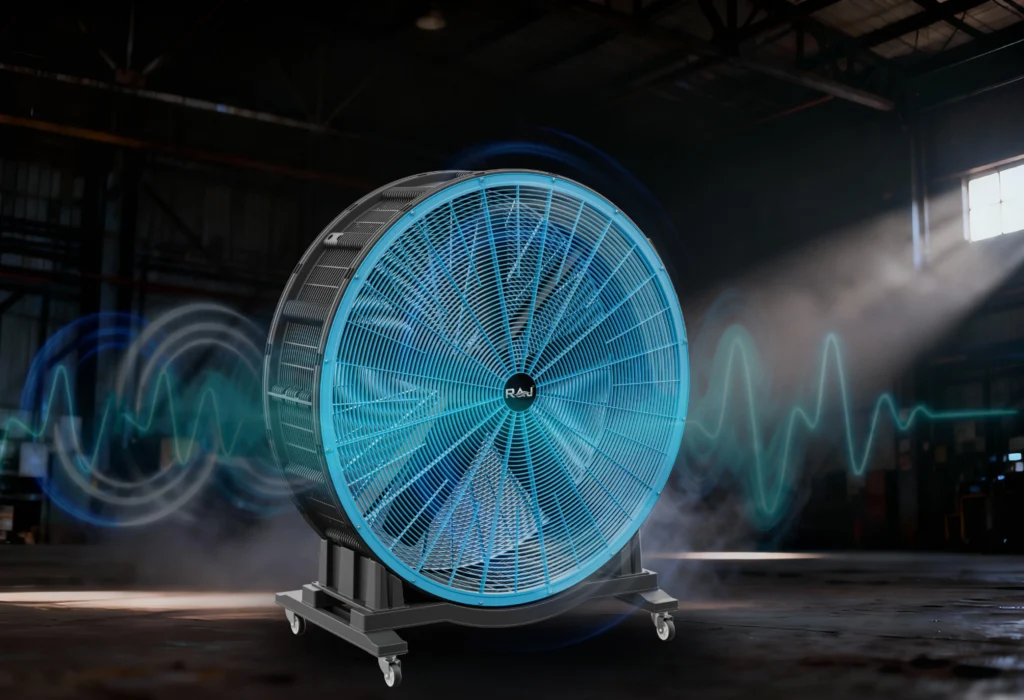
Floor fans are high-speed, portable air-moving devices designed to improve cooling and ventilation across various environments. Their popularity has increased significantly in homes, offices, gyms, shops, workshops, factories, and warehouses due to their ability to deliver strong airflow without the high energy consumption of air conditioners or heavy cooling systems. As heat levels rise and indoor spaces become more crowded, floor fans offer an efficient way to maintain comfort, improve airflow, and reduce stagnant air. They also support ventilation by circulating fresh air and pushing out warm, stale air, creating a more breathable and healthier atmosphere.
Understanding Floor Fans
Floor fans operate by pulling air through their blades and pushing it across wide spaces at high speed, creating a strong cooling effect. These fans usually sit directly on the floor, giving them excellent stability and allowing them to direct airflow low to the ground where heat often accumulates. Their design is compact and portable, making them easy to move from one area to another. While domestic floor fans are generally lightweight and suited for personal or room cooling, industrial floor fans are built with stronger motors, metal bodies, and high CFM output to handle larger and more demanding environments such as warehouses, production floors, and mechanical workshops. This versatility makes floor fans useful for both household and industrial applications.
Types of Floor Fans
Basic Floor Fans
Basic floor fans are mainly used in homes, small shops, or offices where moderate airflow is needed. They are lightweight, simple to use, and offer sufficient cooling for personal spaces or small rooms. These fans are ideal for users who want a portable, easy-to-maintain cooling solution.
High-Speed Industrial Floor Fans
Industrial floor fans are built with powerful motors and durable metal blades designed to deliver high airflow in large or high-temperature environments. They are commonly used in factories, warehouses, workshops, and production plants where continuous ventilation and cooling are necessary. Their rugged build quality ensures long-lasting performance under tough working conditions.
Air Circulator Fans
Air circulator fans are designed to send airflow across long distances and bounce air off walls and ceilings to create a consistent cooling cycle. They are excellent for maintaining overall ventilation in large rooms, office halls, gyms, and industrial units. Their aerodynamic blade structure and powerful motor enable them to work efficiently for long hours.
Drum/Barrel Fans
Drum or barrel fans feature a cylindrical body and are typically used for extremely large spaces such as warehouses, basements, construction sites, and event venues. Their massive airflow output makes them suitable for heavy-duty ventilation, drying floors, removing fumes, and cooling machinery.
Box Fans
Box fans are compact and lightweight, perfect for window placement or small indoor spaces. They help pull cool air from outside or push warm air out, improving indoor ventilation. They are ideal for homes, small offices, and rooms with limited floor space.
Blower Fans
Blower fans use focused, high-pressure airflow to target specific areas. They are commonly used in garages, workshops, paint shops, and industrial environments where precise ventilation is required. Their narrow air outlet design helps direct airflow exactly where needed.
How Floor Fans Improve Cooling & Airflow
Increases Air Circulation
Floor fans significantly increase air circulation by continuously moving air throughout the room, which helps disperse heat and maintain a balanced temperature. In homes, they help cool living rooms and bedrooms. In warehouses and workshops, strong airflow prevents heat from settling and distributes fresh air across the entire space.
Reduces Hot Spots & Stagnant Air
Many indoor environments develop hot pockets areas where air becomes trapped and temperatures rise. Floor fans eliminate these hotspots by pushing air across corners and low-level spaces, improving overall ventilation. This is especially important in factories and workshops where machinery generates heat.
Enhances Ventilation in Closed Areas
Closed or poorly ventilated spaces often accumulate humidity, fumes, and stale air. Floor fans enhance ventilation by drawing fresh air into the environment and circulating it continuously. This helps maintain air quality in basements, garages, kitchens, and industrial units where proper airflow is essential.
Supports AC/Coolers for Faster Cooling
Floor fans support air conditioners and air coolers by helping them distribute cool air more efficiently. Instead of allowing cold air to settle in one area, floor fans push it across the room, reducing cooling time and improving comfort. This combination is energy-efficient and ideal for both homes and commercial spaces.
Improves Air Quality by Reducing Dust & Fumes
Industrial environments often accumulate dust, smoke, and chemical fumes. Floor fans help disperse these particles and prevent them from settling, improving workplace air quality. In garages, production lines, and mechanical rooms, they support exhaust systems by boosting airflow.
Creates a Comfortable Environment for Workers
In manufacturing units, hot and humid conditions can cause fatigue, reduce productivity, and increase the risk of accidents. Floor fans provide targeted cooling at workstations, assembly lines, and loading bays, helping workers stay comfortable and focused. This contributes to a healthier and safer workplace.
Key Benefits of Floor Fans
Floor fans offer cost-effective cooling solutions for a wide range of environments. Their high airflow output ensures strong ventilation even in large spaces, making them suitable for homes, offices, gyms, and warehouses. The compact and portable design allows users to move them easily wherever cooling is needed. They require very low maintenance and consume significantly less electricity compared to air conditioners, helping reduce monthly energy bills. Their powerful motors and durable construction ensure long-lasting performance, even in challenging industrial conditions.
Important Features to Look For
When choosing a floor fan, it is important to evaluate key features such as motor quality, airflow capacity, blade material, and build strength. Fans with copper or BLDC motors deliver better efficiency and longer life. CFM rating indicates the volume of air the fan can move, helping buyers select a model suitable for their space. Metal blades ensure strong airflow, while ABS blades offer quiet operation and corrosion resistance. Durability is crucial for industrial use, where the fan must withstand constant operation. Checking noise levels, tilt adjustment, multiple speed controls, and safety features like grills and overload protection ensures safe and efficient performance.
Applications of Floor Fans
Floor fans are used across a variety of environments due to their versatility. In homes, they provide quick cooling in bedrooms and living areas. Gyms and fitness centers rely on them to maintain fresh air and reduce sweat odor. Restaurants and commercial kitchens use them to push out heat and keep staff comfortable. Garages and workshops benefit from their ability to remove fumes and cool equipment. Warehouses and factories depend on high-speed industrial floor fans for ventilation and temperature control. They are also widely used in events, exhibitions, and outdoor gatherings for cooling large crowds and creating airflow in open areas.
Floor Fans vs Pedestal Fans vs Wall Fans
| Feature | Floor Fans | Pedestal Fans | Wall Fans |
|---|---|---|---|
| Airflow | High, powerful airflow at ground level | Adjustable height airflow | Moderate airflow for focused areas |
| Portability | Highly portable | Portable but larger | Fixed position |
| Space Requirement | Requires floor space | Requires floor space | Saves floor space |
| Use Case | Homes, gyms, factories, warehouses | Homes, offices, commercial spaces | Shops, kitchens, hallways |
Energy Efficiency & Cost Savings
Floor fans provide excellent energy efficiency compared to air conditioners, blowers, or ventilation machines. Their motors consume significantly less electricity while delivering strong airflow that can cool large spaces. When used with ACs or coolers, they help distribute cool air faster, reducing the cooling load and lowering energy bills. Businesses and homeowners can rely on floor fans as a low-cost cooling solution that offers great value and long-term savings.
Maintenance Tips
Maintaining a floor fan is simple and ensures long-lasting performance. Regular cleaning of the blades prevents dust buildup that can reduce airflow. Lubricating the motor, if required, helps maintain smooth operation. Checking wiring and ensuring safe placement prevents accidents and electrical issues. Protecting the fan from excessive dust and moisture extends its lifespan and keeps it functioning efficiently throughout the year.
Conclusion
Floor fans are powerful, versatile, and cost-effective cooling solutions for homes and businesses. They improve airflow, reduce hot spots, enhance ventilation, and create a comfortable environment across various settings. Their strong design, portability, and wide application make them an essential tool for maintaining indoor comfort, whether in a small room or a large industrial facility. By choosing the right fan based on airflow needs, build quality, and operating environment, users can enjoy efficient cooling and long-term performance from a reliable floor fan.