
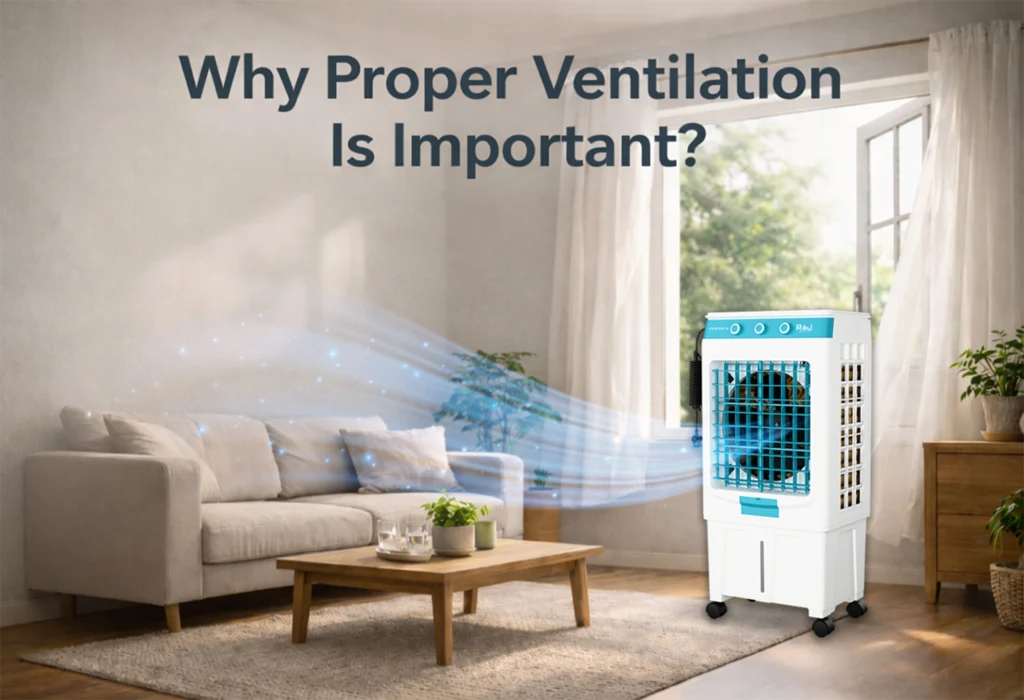
Evaporative air coolers have become increasingly popular across homes, offices, factories, and commercial spaces because they offer natural, energy-efficient cooling at a much lower cost than air conditioners. However, many users make the mistake of operating air coolers the same way they use ACs by sealing doors and windows completely. This misconception often leads to poor cooling results, excess humidity, and discomfort. Unlike air conditioners, evaporative air coolers depend heavily on proper ventilation to function effectively. Understanding the importance of ventilation is essential to achieving optimal cooling performance, maintaining indoor air quality, and ensuring a comfortable and healthy environment.
How Evaporative Air Coolers Work
Evaporative air coolers work on a simple yet effective principle of evaporative cooling, where hot air is drawn into the cooler and passed through water-soaked cooling pads. As the air moves through these pads, water evaporates and absorbs heat from the air, lowering its temperature before it is released into the room. This process requires a continuous supply of fresh air and an outlet for warm, humid air to escape. Without proper intake and exhaust, the cooling cycle becomes inefficient, as the cooler keeps recirculating already humid air instead of bringing in fresh, dry air for effective cooling.
What Happens Without Proper Ventilation?
When an evaporative air cooler is used in a poorly ventilated or completely sealed room, humidity levels start rising rapidly. As moisture builds up in the air, the evaporation process slows down, which directly reduces cooling performance. Instead of feeling cool and refreshing, the indoor environment becomes sticky, stuffy, and uncomfortable. Over time, the lack of ventilation can make the cooler feel ineffective, even though it is running continuously, leading users to believe the cooler is faulty when the real issue is improper airflow.
Benefits of Proper Ventilation with Evaporative Coolers
Proper ventilation significantly improves cooling efficiency by allowing warm air to escape and fresh air to enter the space continuously. This constant air exchange helps remove heat faster, enabling the cooler to maintain a steady and comfortable temperature. Balanced ventilation also keeps indoor humidity at a healthy level, preventing excess moisture buildup. With better air circulation, the cooler can operate at its full potential, delivering consistent airflow and a noticeably cooler environment without discomfort or dampness.
Impact of Ventilation on Air Quality & Health
Ventilation plays a crucial role in maintaining indoor air quality when using evaporative air coolers. Fresh air circulation ensures a steady supply of oxygen while preventing stale air and odors from accumulating indoors. Proper airflow also reduces the risk of dampness, mold, and bacterial growth that can occur in overly humid environments. By promoting healthier air conditions, good ventilation helps prevent headaches, fatigue, breathing discomfort, and allergies, making evaporative cooling safer and more comfortable for long-term use.
Ideal Ventilation Setup for Evaporative Coolers
An ideal ventilation setup involves keeping windows or doors partially open to allow warm air to exit while fresh air enters the room. Cross-ventilation where air enters from one side and exits from another is especially effective in enhancing cooling performance. Planning airflow direction is equally important, as positioning the cooler near an opening allows it to draw in fresh air more efficiently. This setup ensures that the evaporative cooling process remains active and effective throughout the day.
Ventilation Tips for Homes
In residential spaces, opening a window or door by even a few inches is usually enough to create proper airflow for an evaporative air cooler. Placing the cooler near a window helps it pull in fresh air directly, improving cooling efficiency. During the daytime, maintaining cross-ventilation helps remove hot air quickly, while at night, slightly reducing openings can balance cooling and comfort. Simple ventilation practices make a noticeable difference in cooling performance and indoor comfort at home.
Ventilation Tips for Offices & Commercial Spaces
Offices and commercial areas often have limited natural ventilation, making airflow management even more important. Using exhaust fans alongside evaporative air coolers helps remove warm, humid air effectively. In large or closed spaces, directing airflow toward exits or exhaust points ensures continuous air movement. Maintaining proper ventilation during long working hours not only improves cooling efficiency but also enhances employee comfort, focus, and productivity.
Common Ventilation Mistakes to Avoid
One of the most common mistakes users make is completely sealing rooms while running evaporative air coolers. Incorrect cooler placement away from fresh air sources also reduces efficiency significantly. Ignoring airflow exits causes humidity to build up and cooling performance to drop. Avoiding these mistakes is essential to get the best results from evaporative cooling systems and prevent discomfort or dissatisfaction.
Evaporative Cooler vs Air Conditioner Ventilation Needs
Air conditioners and evaporative air coolers have very different ventilation requirements. ACs rely on closed rooms to retain cooled air and prevent energy loss, whereas evaporative coolers need fresh airflow to function effectively. While ACs recirculate indoor air, evaporative coolers continuously introduce fresh air, improving ventilation and air quality. Understanding this difference helps users choose the right cooling method and operate it correctly for maximum comfort and efficiency.
How Proper Ventilation Improves Energy Efficiency
Proper ventilation reduces the workload on the cooler’s motor and fan, allowing it to cool the space faster and more efficiently. With smooth airflow and effective heat removal, the cooler does not need to run at maximum speed for extended periods. This leads to lower electricity consumption and improved energy-efficient cooling. Over time, correct ventilation practices help reduce power bills while maintaining consistent cooling performance.
Conclusion
Proper ventilation is a critical factor in the effective use of evaporative air coolers, directly influencing cooling efficiency, comfort, air quality, and energy savings. By allowing fresh air circulation and ensuring warm air can escape, users can experience cooler, healthier, and more comfortable indoor environments. Whether at home, in offices, or in commercial and industrial spaces, understanding and implementing proper ventilation practices ensures evaporative air coolers perform at their best. Using these systems correctly not only enhances cooling performance but also promotes long-term comfort, health, and energy efficiency.