
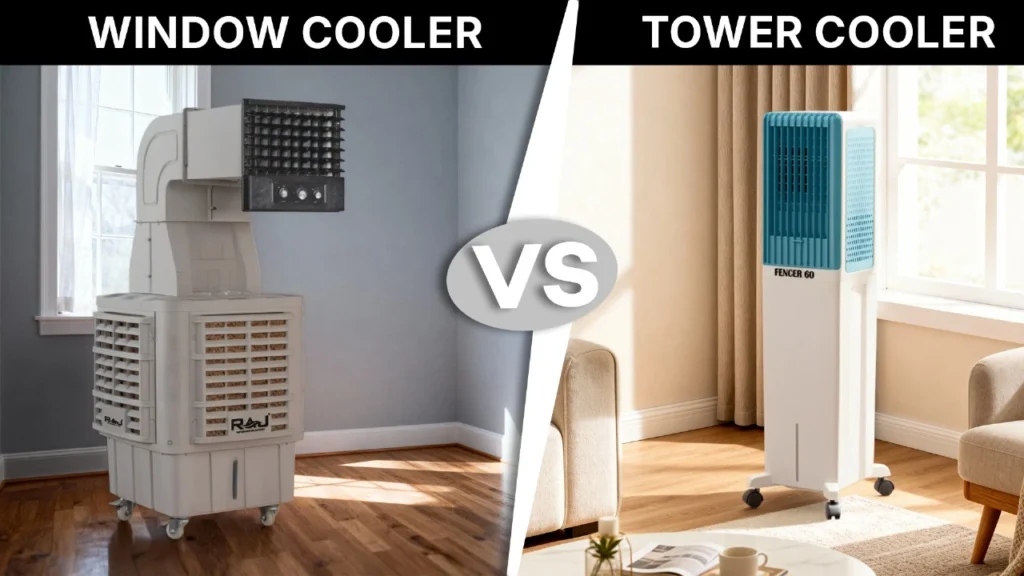
Air coolers have become a preferred cooling solution for many Indian homes and offices due to their affordability, low electricity consumption, and eco-friendly cooling method. However, choosing the right type of cooler can be confusing, especially when deciding between two of the most popular categories: window air coolers and tower air coolers. Each cooler type offers its own set of strengths, design benefits, and usage advantages. Understanding their differences helps buyers make an informed decision that aligns with their room size, cooling needs, budget, and installation convenience. This blog provides a clear and comprehensive air cooler comparison to help you decide whether a window air cooler or a tower air cooler is the best choice for your home, office, or commercial space.
What Is a Window Air Cooler?
A window air cooler is designed to be installed in a window or external wall opening, similar to a window AC. Its box-type structure allows it to draw fresh air from outside, pass it through water-soaked cooling pads, and deliver strong, cool airflow indoors. Window coolers generally feature a high-capacity blower, large cooling pads, and deep tank size, making them suitable for medium to large rooms. Their installation ensures that hot air escapes outside while cool air circulates inside, improving overall cooling performance.
Window coolers are known for their powerful air throw and greater cooling coverage. They work best in bedrooms, living rooms, shops, restaurants, and semi-open environments where airflow is strong and constant. Although they require fixed installation and a dedicated opening, they compensate with excellent cooling strength and durability. For users prioritizing performance over portability, a window air cooler is a highly efficient choice.
What Is a Tower Air Cooler?
A tower air cooler is tall, sleek, compact, and designed to blend seamlessly with modern interiors. Tower coolers are portable and lightweight, making them ideal for users who prefer flexibility and convenience. Their vertical design allows better use of space, especially in smaller rooms or areas with limited floor space. Unlike window coolers, tower air coolers work on oscillating airflow, distributing cool air evenly across the room.
Tower coolers come with moderate cooling capacity but excel in aesthetics, silent operation, and ease of use. They require no installation, making them perfect for rented homes, apartments, offices, and personal use areas. Their energy efficiency and comfort-focused design make them a favorite choice for urban households and workspace cooling. Users looking for a stylish and portable option will appreciate the benefits of a tower air cooler.
Key Differences Between Window and Tower Coolers
Window and tower air coolers serve different purposes, and their core differences help buyers select the right model depending on the usage environment.
When comparing window vs tower cooler performance, window coolers are significantly more powerful. They provide higher airflow, deeper cooling, and wider coverage because they draw fresh outdoor air while pushing warm air out. Tower coolers, however, offer moderate cooling suitable for smaller spaces, focusing on silent airflow and stylish design.
Airflow direction also differs. Window coolers deliver strong unidirectional flow, ideal for large rooms or semi-open areas, while tower coolers offer oscillating airflow that spreads cool air across compact rooms. In terms of energy efficiency, both designs consume less power than air conditioners, but tower coolers generally use slightly less electricity due to their smaller motors.
Portability is a major distinction. Window coolers require fixed installation, whereas tower coolers can be moved anywhere. Window coolers are louder due to their powerful blowers, while tower coolers operate quietly. Tank capacity is typically larger in window coolers for longer cooling duration. Price range also varies: window coolers cost more due to higher cooling capacity, while tower coolers are more budget-friendly.
Which Cooler Is Better for Homes?
Choosing the best cooler for home depends on room size and personal preference. For medium to large rooms such as living rooms and master bedrooms, window coolers offer superior cooling strength and air coverage. Their powerful performance makes them suitable for families seeking deeper cooling during peak summer. However, in smaller rooms, apartments, and compact spaces, tower coolers are the better choice. Their slim design, quiet operation, and quick setup allow effortless daily use without installation hassles.
For kitchens, window coolers work better because they can handle higher temperatures and provide stronger ventilation. For personal rooms, guest rooms, and study areas, tower coolers offer comfortable cooling without disturbing noise, making them more suitable for close-range or personalized cooling.
Which Cooler Is Better for Offices?
Office environments often demand cooling solutions that are efficient, silent, and space-saving. Tower coolers fit these requirements perfectly. Their quiet motors and gentle airflow provide a comfortable working atmosphere without disturbing employees or meetings. They also blend well with modern office interiors and can be easily moved from one cabin to another as needed.
Window coolers are suitable for larger office spaces like conference halls or rooms with high heat load. However, their noise level and installation requirement make tower air coolers the preferred office air cooler for most workplace environments.
Which Cooler Works Best for High-Heat or Outdoor Areas?
Window coolers outperform tower coolers in high-temperature or semi-open environments because they are designed for robust cooling. They can cool larger spaces and maintain performance even when external heat is high. Outdoor cafés, small workshops, terraces, and verandas benefit more from window coolers due to their high air delivery and durable build.
Tower coolers, on the other hand, are not recommended for outdoor use because their compact size and cooling method are designed for indoor environments. They may not deliver sufficient cooling in hot or open spaces.
Pros and Cons Summary Table
| Feature | Window Air Cooler | Tower Air Cooler |
|---|---|---|
| Cooling Strength | High | Moderate |
| Installation | Required | Not required |
| Portability | Low | High |
| Noise Level | Moderate to high | Low |
| Tank Capacity | Large | Medium |
| Space Requirement | Wall/window space | Small footprint |
| Ideal Use | Large rooms, semi-open areas | Homes, offices, compact rooms |
| Price | Moderate to high | Budget to mid-range |
Factors to Consider Before Choosing
Before deciding between a window or tower cooler, it’s important to evaluate room size, cooling requirements, climate conditions, and portability needs. Large rooms demand higher CFM, which window coolers provide. For small rooms or rented homes, tower coolers offer convenience and flexibility. People living in humid regions should consider ventilation options, as evaporative coolers perform best in dry climates. Budget also plays a role, with tower coolers being more cost-effective upfront, while window coolers offer long-term value due to stronger cooling.
Installation constraints should also be considered. If the room lacks a window or wall opening, a tower cooler is the logical choice. For users prioritizing strong airflow and coverage, window coolers offer clear advantages.
Popular Brands Offering These Coolers
Several reliable Indian brands manufacture high-performance window and tower coolers. Raj Cooling Systems, Symphony, Bajaj, Crompton, and Orient offer a range of models with different capacities and features. Raj Cooling Systems, in particular, focuses on powerful cooling designs suitable for Indian climatic conditions, offering both sturdy window coolers and stylish tower models with efficient air distribution. Choosing a brand with strong after-sales support ensures longer cooler life and better user experience.
Conclusion
Understanding the key differences between window air coolers and tower air coolers helps buyers select the right cooling solution for their needs. Window coolers are ideal for high-heat environments, large rooms, and semi-open areas due to their strong cooling capacity. Tower coolers, with their sleek design and portability, are perfect for compact rooms, offices, and modern home interiors. By considering room size, airflow requirements, installation feasibility, and budget, users can make a confident and well-informed purchase decision that ensures comfort and efficiency throughout the summer.